

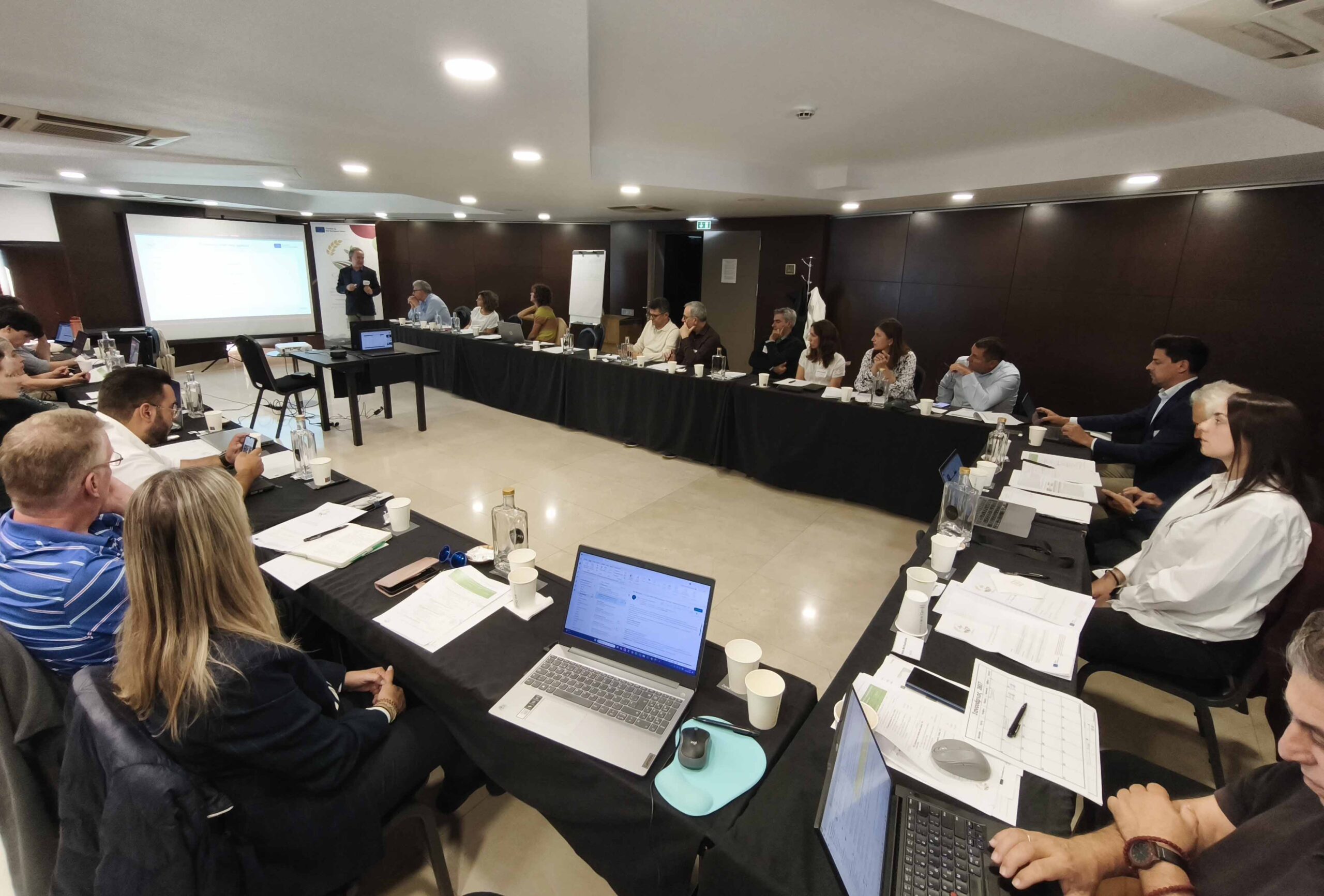
Hosted by Food4Sustainability (F4S) on 29–30 October 2026, the project’s second General Meeting brought together consortium partners and stakeholders to review progress and help shape the selection of sustainable cropping success stories.
The Crop-MATCHING consortium gathered in Lisbon, Portugal, for its second General Meeting, organised by project partner Food4Sustainability (F4S). Held in a hybrid format, the two-day meeting also welcomed Tiago Freitas, the project’s EU Project Officer, who contributed to discussions and provided feedback on the project’s progress and next steps.
Partners reviewed the work undertaken during the first year, including the mapping of sustainable cropping practices, the identification of 30 lighthouse practices across the ten target countries, and the assessment of farmers’ information and training needs. Discussions highlighted the importance of reflecting Europe’s regional diversity and ensuring that the practices selected respond to the realities of small-scale farming.
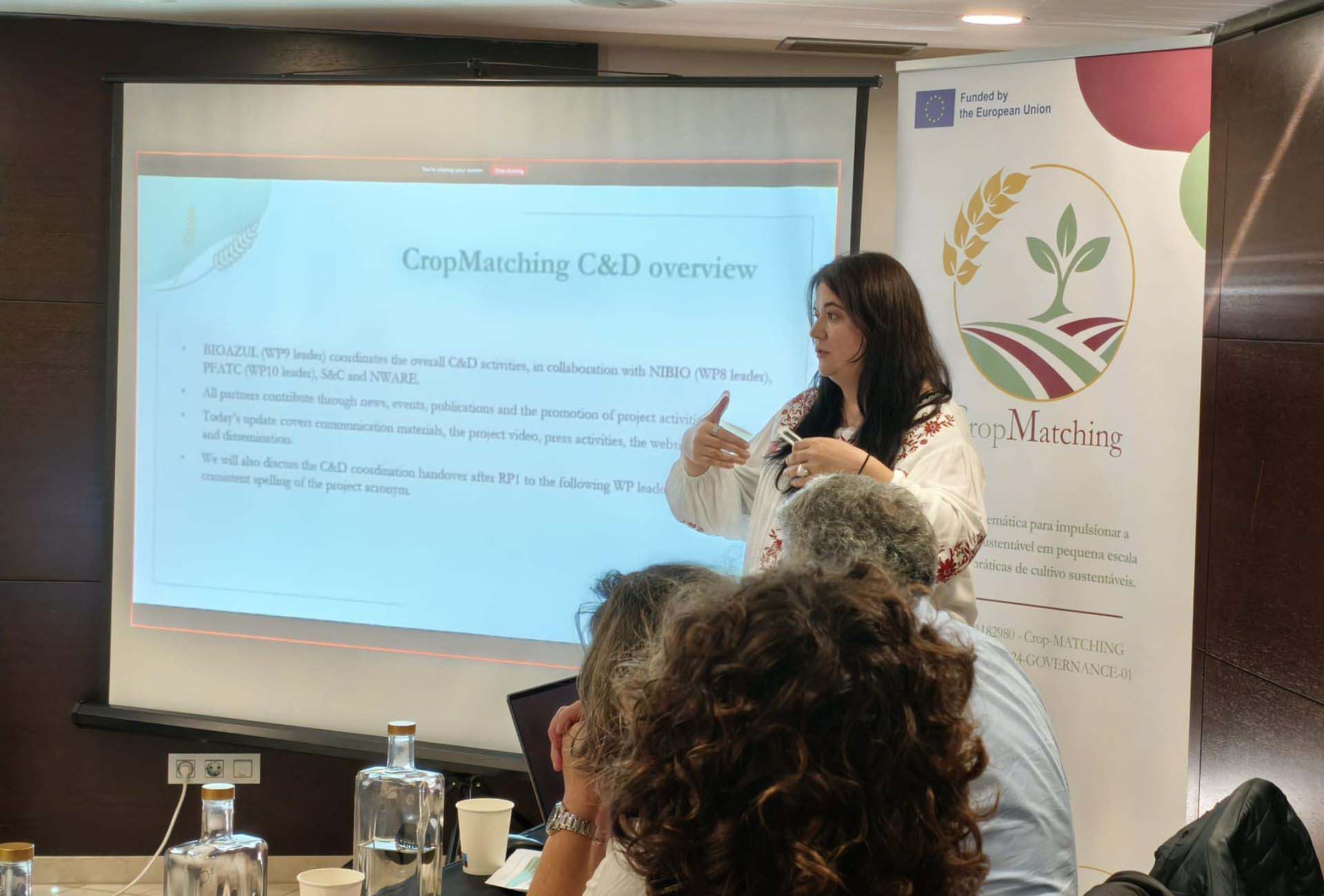
The meeting also covered policy and governance needs, communication and dissemination activities, and project management. Partners presented the first draft of the project video and discussed improvements to the website to make project outputs more accessible.
Stakeholders help shape the selection of success stories
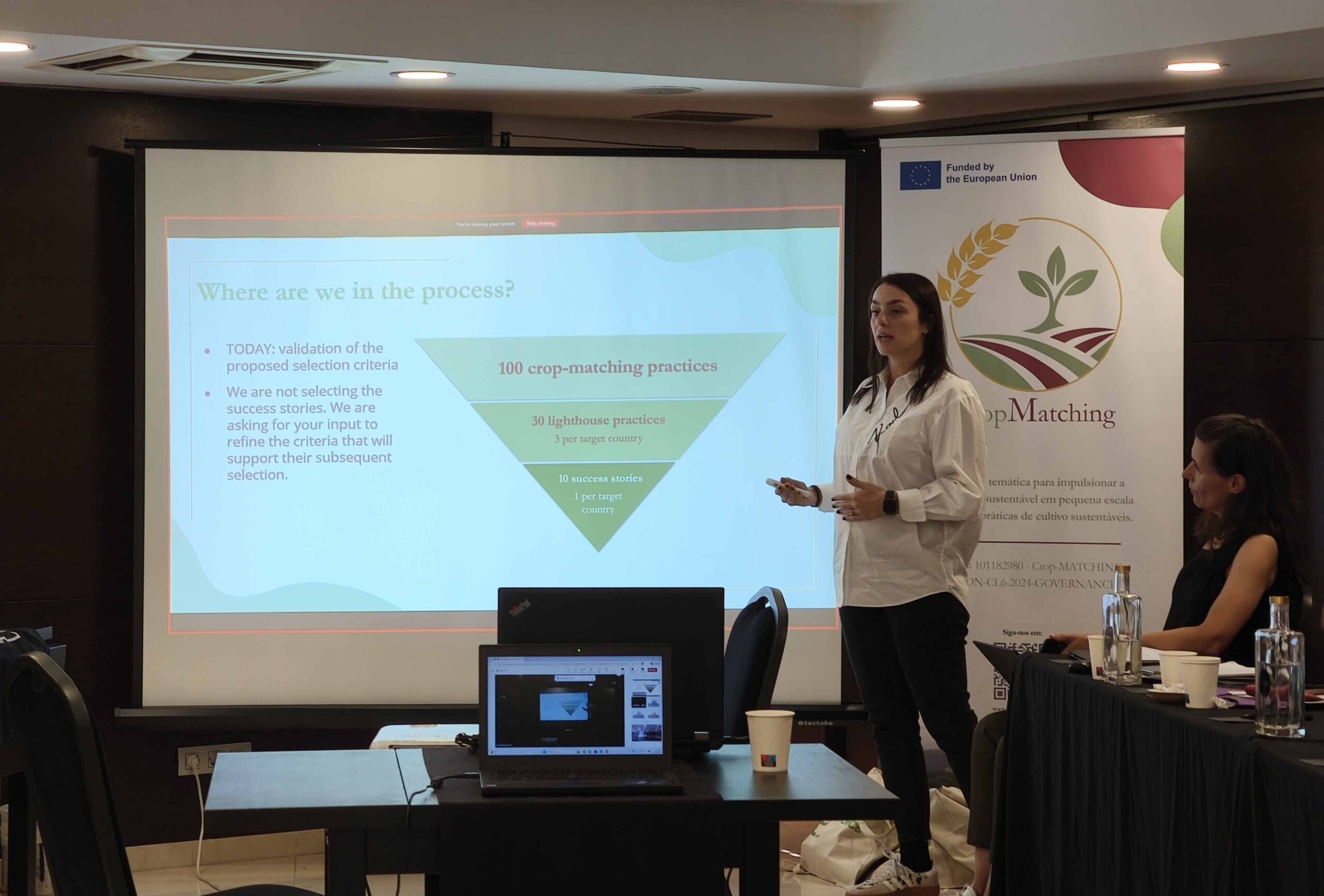
A central part of the programme was the first European Thematic Network Exchange, held on the afternoon of 29 October. The hybrid event connected consortium members with external stakeholders to discuss how Crop-MATCHING should select its final ten success stories, one per target country, from the 30 lighthouse practices.
The exchange opened with a welcome from F4S and an introduction to the project by its coordinator, Aristotle University of Thessaloniki (AUTH). The University of Parma (UNIPR) presented the methodology used to identify the lighthouse practices, illustrated through examples from different countries and farming systems.
An interactive session led by AUTH then invited participants to assess the proposed success-story selection criteria through live polls and discussion. Relevance to farmers’ needs, practical feasibility and economic viability received particularly strong support. Participants also raised the importance of biodiversity, demonstrable benefits and farmers’ direct involvement in the selection process.
The discussion generated suggestions on underutilised crops, market needs and consumer awareness, alongside proposals to clarify some of the existing criteria. These contributions will inform the refinement of the selection framework and support the national Practice Groups in identifying their success stories.
Turning stakeholder contributions into project progress
The exchange demonstrated how the European Thematic Network can generate practical input for ongoing project tasks. Building on this approach, partners discussed two further exchanges to be organised by PFATC in Poland and CENCIRA in Romania, with completion planned by the end of February 2027.
The Lisbon meeting concluded with agreement on the next steps for validating practices, assessing training needs and maintaining stakeholder involvement, keeping small-scale farmers’ needs at the centre of Crop-MATCHING’s work.

Horizon Europe Research and Innovation Programme
Grant Agreement No. 101182980
Views and opinions expressed are those of the author(s) only and do not necessarily reflect those of the European Union or the European Research Executive Agency. Neither can be held responsible.