

Crop-MATCHING introduced at Ege University
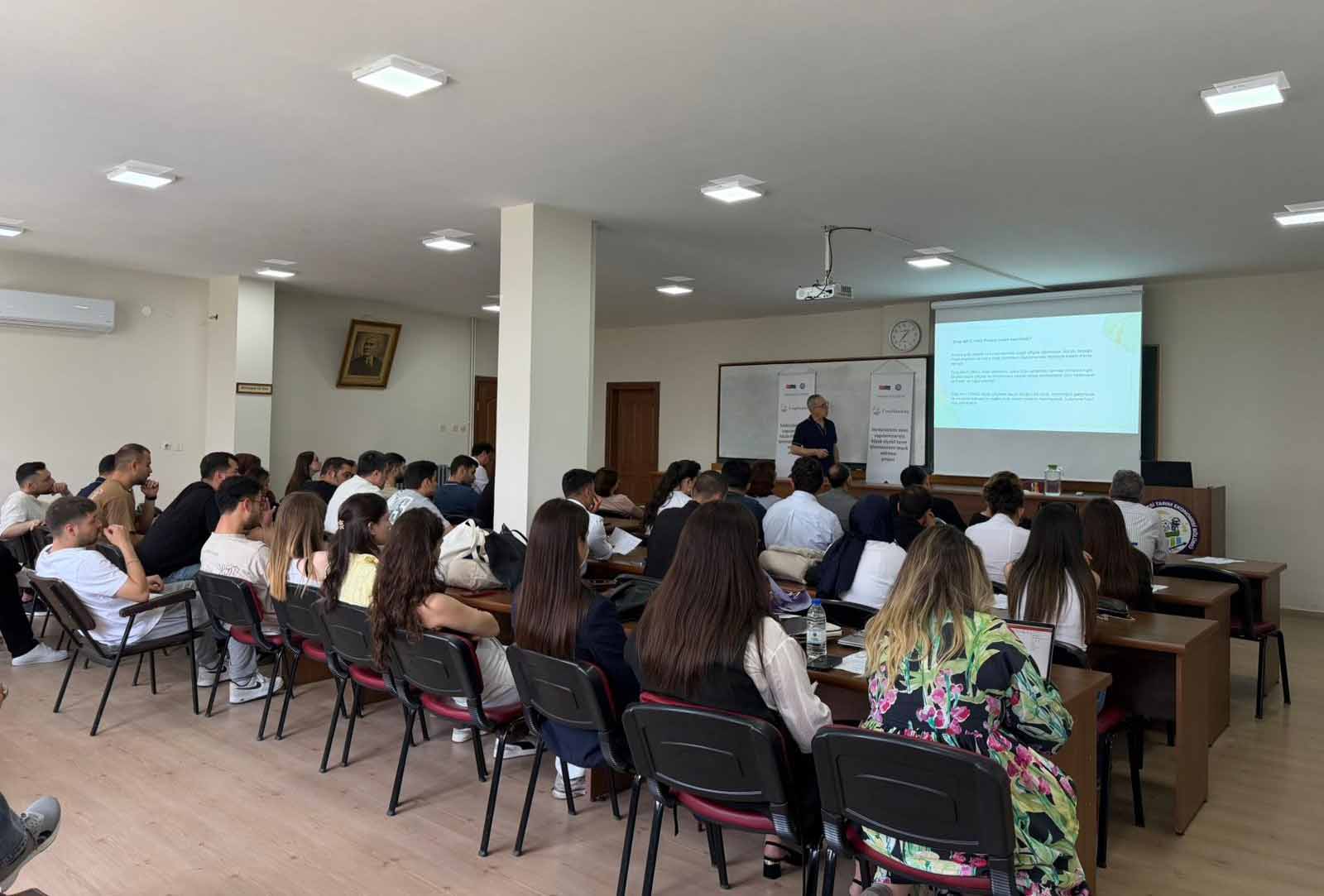
The Crop-MATCHING Project was introduced at Ege University in Izmir within the scope of the “Student Seminar Days 2026,” a seminar program organized semi-annually by the Faculty of Agriculture’s Department of Agricultural Economics. The event was held between May 11 and 14, 2026, on the Ege University campus.
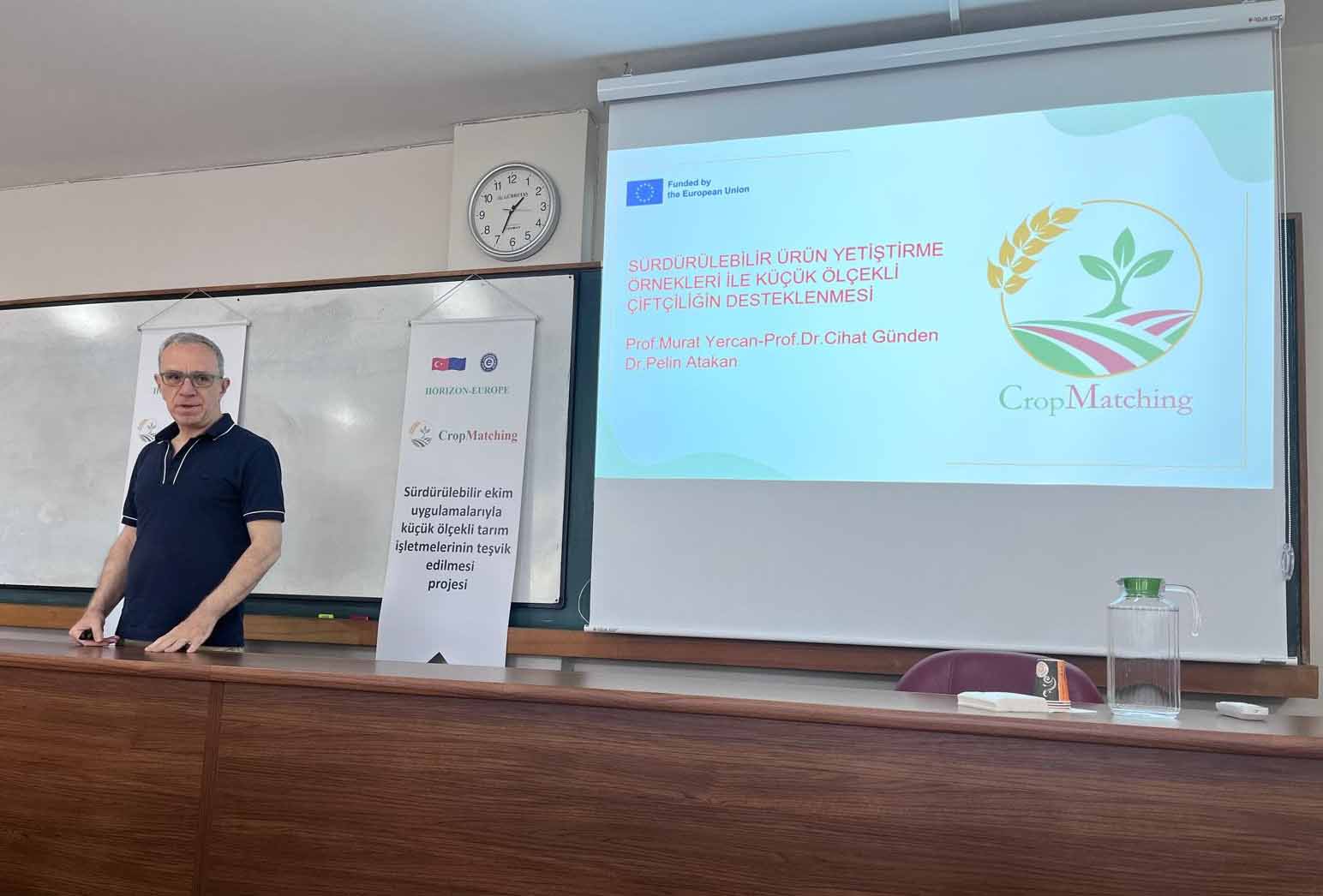
During the event, Ege University team leader Professor Murat Yercan presented the project, focusing on its core objectives, upcoming activities, and future outcomes. His presentation placed particular emphasis on several crop-matching practices, including intercropping, agroforestry, and crop rotation. He explained how the project will bring a fresh, practical perspective to agricultural applications and provide critical decision-making support for smallholder farmers. Within this context, the dissemination of Crop-MATCHING’s activities was highlighted as a vital step for the next generation of agricultural professionals. The presentation explained how the project’s insights and tools will directly benefit undergraduate and graduate students who will soon shape the sector as agricultural engineers, rural development advisors, or progressive farmers.
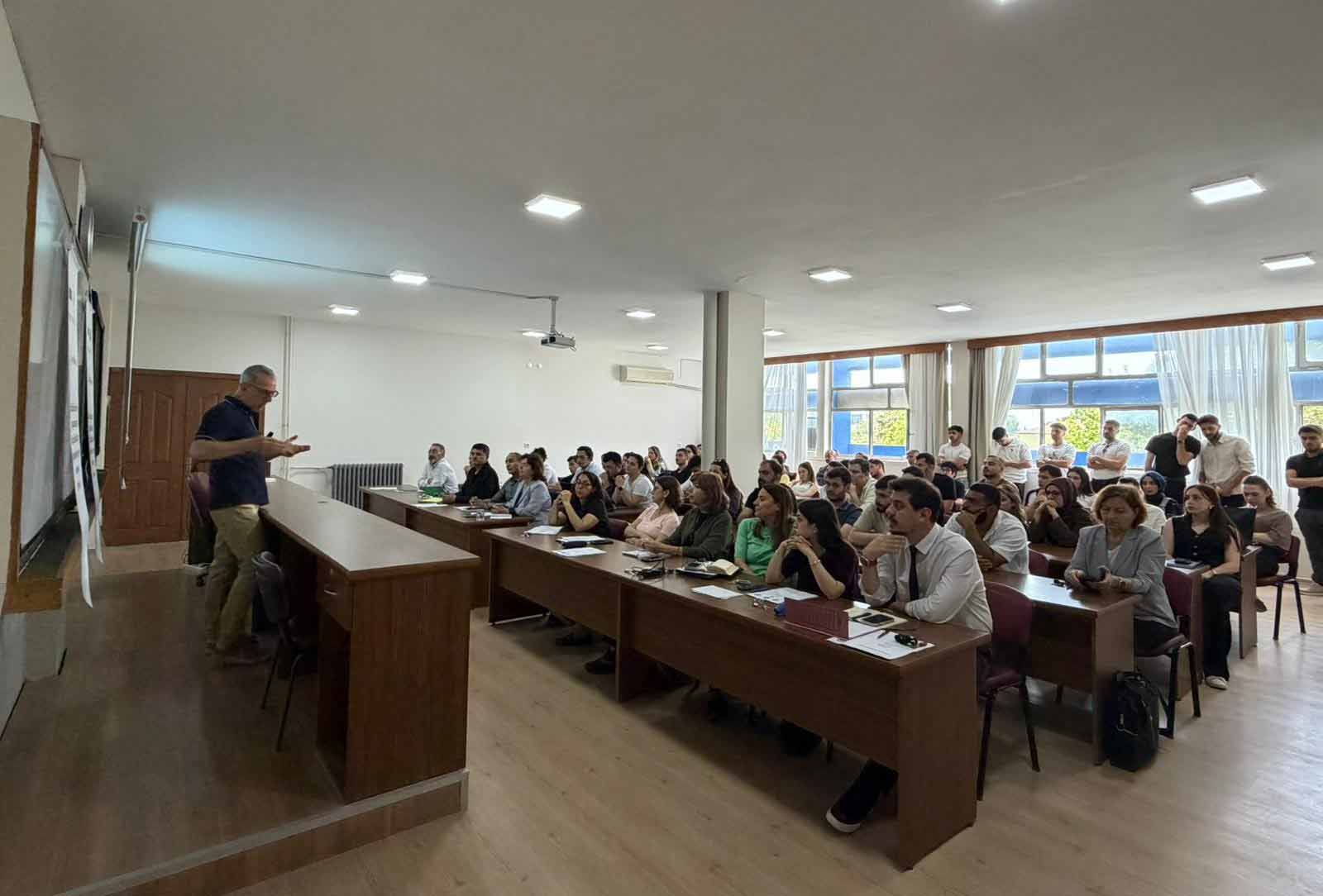
The session gathered approximately
attending in person, including academic staff, undergraduate, and graduate students, creating a valuable opportunity for discussion and interaction between researchers and future agricultural leaders. The project topic and content attracted great interest. The attendees eagerly remarked that they anticipated the practical outcomes of the project.
Participation in the Student Seminar Days represented an important step in Crop-MATCHING’s stakeholder and youth engagement activities, helping to bridge academic research with future field applications. The event successfully increased awareness of the project’s mission to foster resilient, data-driven, and sustainable agricultural practices.

Horizon Europe Research and Innovation Programme
Grant Agreement No. 101182980
Views and opinions expressed are those of the author(s) only and do not necessarily reflect those of the European Union or the European Research Executive Agency. Neither can be held responsible.