

Agroforestry: Matching trees, crops and animals to build resilience
Agroforestry refers to land management systems in which woody perennials, such as trees and shrubs, are grown alongside agricultural crops and/or animals on the same piece of land[i]. Traditional agriculture often treats the landscape as a factory floor: maximize the output of a single commodity, minimize “waste” such as weeds or shade, and rely on external inputs to correct the resulting imbalances. Agroforestry rejects this linear logic. Instead, it embraces complexity. By introducing woody perennials, it creates a multi-layered agricultural system in which different species interact. These interactions are not accidental; they are rather functional. Trees fix nitrogen, cycle nutrients from deeper soil layers, provide windbreaks, and create microclimates that buffer crops against extreme weather. In return, crops provide ground cover, improve soil health, and generate immediate economic returns while the trees mature. Agroforesty is in fact designing a resilient ecosystem that produces food, fiber, and fuel at the same time.
While agroforestry is not new, it involves traditional techniques deeply embedded in many cultures, it is experiencing a revival today. Because it offers a path away from the industrial monoculture model, which often depletes soil and depends heavily on chemical inputs, toward a system that mimics natural ecological processes.
There are three main types of agroforestry systems. In agrisilvicultural systems, trees and crops are combined, typically by sowing annual or biennial crops in the alleys between tree rows; homegardens also fall into this category. In silvopastoral systems, trees and grazing land are integrated, as seen in wooded rangelands. Finally, in agrosilvopastoral systems, trees, animals, and crops are all combined on the same land[ii].
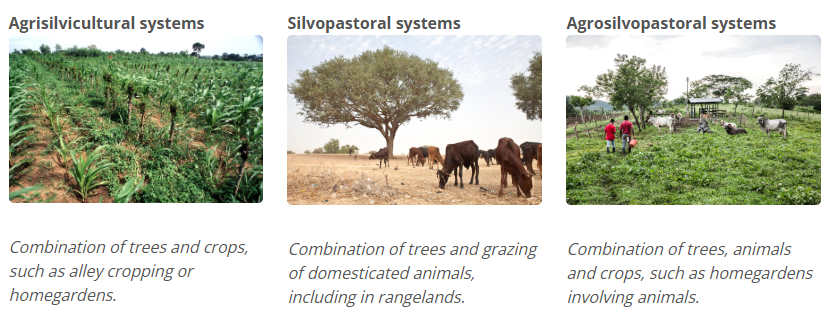
Figure 1. Three types of agroforestry. Source: https://www.fao.org/agroforestry/about-agroforestry/overview/en
The case for agroforestry is often framed in environmental terms, but the economic argument is equally strong. One example is growing rhubarb, a hardy understory crop, along tree rows to take advantage of the shade provided by the canopy[iii]. The EU-funded AF4EU project features this agroforestry system, demonstrating how land use can be optimized and farm productivity improved, particularly during the early years of tree establishment, when the trees are not yet fully productive.
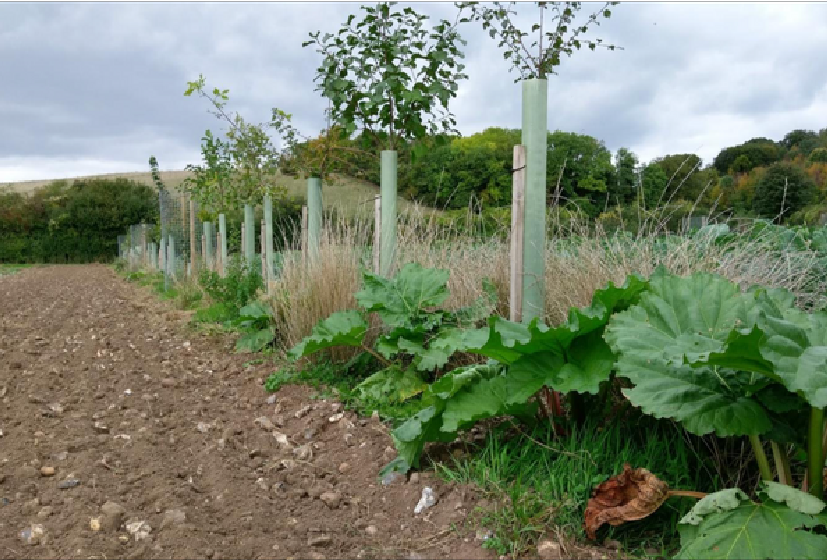
Figure 2. Apples and rhubarb at Tolhurst Organics Agroforestry, UK(AGFORWARD) Source: https://af4eu.eu/wp-content/uploads/2025/11/6_AF4EU_PA_UGent_RhubarbAlleycropping_EN.pdf
Another example is the use of tree windbreaks to reduce damage from extreme storms and to moderate local temperatures. A study conducted in citrus and vegetable systems in Florida, USA, showed that single-row tree windbreaks can reduce wind speed by up to 31 times the windbreak height on the leeward side and modify the microclimate in ways that enhance crop production[iv].
A powerful example of this integration is the Amazonian Chakra, a traditional Indigenous agroforestry system in Ecuador. It combines staple foods like cassava, plantain, and chonta palm with timber, fruit, and medicinal plants. Over generations, farmers have added commercially valuable species such as fine-aroma cocoa, Robusta coffee, and more recently, guayusa (Ilex guayusa). These plots, typically around 0.5 hectares, are situated near primary and secondary forests. The fine-aroma cocoa produced here has secured a strong position in niche international markets, proving that ancestral knowledge can drive modern economic value. The Amazonian Chakra was officially recognized as a Globally Important Agricultural Heritage System (GIAHS) by FAO in January 2023[v].
Ecologically, the benefits are well established. Soil health improves significantly as root structures deepen and organic matter increases. In Türkiye’s Manisa region, for instance, a national NGO TEMA, which focuses on soil conservation and erosion prevention, introduced cover crops in olive orchards and observed an increase in soil organic matter, which in turn expected to contribute to higher olive yields[vi].
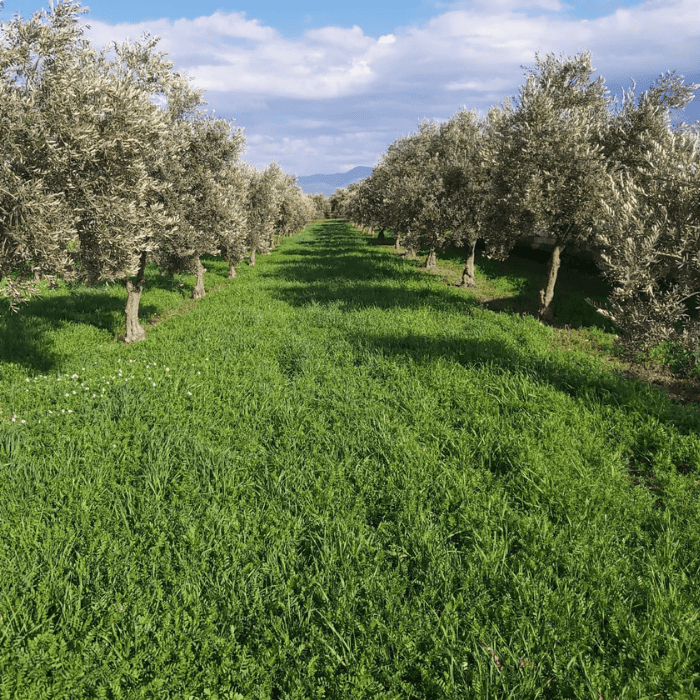
Figure 3. Olive orchard with cover crops. Source: https://www.tema.org.tr/en/our-works/rural-development/green-fertilization-project-in-olive-grove-areas
Agroforestry practices can also restore biodiversity, bringing back pollinators and natural pest predators. They can serve as a tool for carbon sequestration and for strengthening resilience to climate extremes. In an era of growing climate volatility, these systems offer a degree of protection that conventional farming simply cannot match. Overall, agroforestry systems can deliver a wide range of benefits, from preserving biodiversity to boosting crop productivity, from improving the resilience of agricultural systems to extreme weather, to increasing soil organic matter[vii].
Interesting facts about agroforestry
- Not just a niche practice: Agroforestry already covers over more than 43% of all agricultural land globally. Agroforestry practices are particularly common in Southeast Asia, Central America, and South America. Approximately 30% of the global rural population lives on land classified as agroforestry, making it a cornerstone of livelihoods[viii][ix].
- A remarkable figure for actively farmed land: Agroforestry systems have been documented to retain 50–80% of the biodiversity found in intact natural forests[x].
- All round resilience: A recent meta-analysis shows that on-farm biodiversity enhanced by 25%–40% and soil organic carbon content improved by an average of 15% over two decades[xi].
- A serious climate mitigation tool: A single hectare of agroforestry stores up to approximately 300 metric tonnes of carbon. Aboveground biomass in agroforestry systems sequesters 0.3 to over 15 metric tonnes of carbon per hectare annually[xii].
EU-funded projects focusing on agroforestry
- AfroGrow project aims to promote sustainable agroforestry practices across the African Union, transforming agroforestry systems into resilient, multifunctional landscapes that enhance food security, mitigate climate change and foster inclusive growth[xiii].
- AF4EU project aims to promote agroforestry in Europe through the development of a multi-actor interactive and innovation-driven expanded agroforestry network[xiv].
- AGROMIX project aims to conduct participatory research to drive the transition towards resilient and efficient land use in Europe[xv].
References:
[i] https://www.fao.org/agroforestry/about-agroforestry/overview/en
[ii] https://www.fao.org/agroforestry/about-agroforestry/overview/en
[iii] https://af4eu.eu/wp-content/uploads/2025/11/6_AF4EU_PA_UGent_RhubarbAlleycropping_EN.pdf
[iv] Tamang, B., Andreu, M. and Rockwood, D. (2010). Microclimate patterns on the leeside of single-row tree
windbreaks during different weather conditions in Florida farms: Implications for improved crop production.
Agroforestry Systems, vol. 79, pp. 111–122.
[v] https://www.fao.org/agroforestry/activities/faos-work/article-detail/the-amazonian-chakra–a-traditional-agroforestry-system-managed-by-indigenous-communities-in-napo-province–ecuador/en
[vi] https://cdn-tema.mncdn.com/Uploads/Cms/zeytin_brosur_digital.pdf
[vii] https://openknowledge.fao.org/server/api/core/bitstreams/bf9ac694-29f7-466c-9187-a24d432e0ccb/content
[viii] https://www.fao.org/agroforestry/en
[ix] https://www.fao.org/agroforestry/about-agroforestry/overview/en
[x] https://www.fao.org/agroforestry/en
[xi] Abebaw, S. E., Yeshiwas, E. M., & Feleke, T. G. (2025). A systematic review on the role of agroforestry practices in climate change mitigation and adaptation. Climate Resilience and Sustainability, 4(2), e70018.
[xii] Withaningsih,S. , Nurmilah,S. and Utama,G. (2026). The role of carbon sequestration and biodiversity in agroforestry for climate change mitigation. Global Journal of Environmental Science and Management, 12(1), 431-452. doi: 10.22034/gjesm.2026.01.24
[xiii] https://cordis.europa.eu/project/id/101182027
[xiv] https://cordis.europa.eu/project/id/101086563
[xv] https://cordis.europa.eu/article/id/457160-agroforestry-as-a-route-to-more-sustainable-agriculture

Horizon Europe Research and Innovation Programme
Grant Agreement No. 101182980
Views and opinions expressed are those of the author(s) only and do not necessarily reflect those of the European Union or the European Research Executive Agency. Neither can be held responsible.